
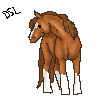
In the quiet pauses, he wonders what she could possibly have done that she believes she needs redemption for; he cannot see the shadows of her past, not beyond the hint of something darker in her gaze and her words, and to him she seems much too pure and kind and friendly to need any sort of restoration. But, perhaps, she does not see anything in him which needs redemption either. It seems that in the shelter of these branches, Leliana is receiving the time and attention of a Rhonen from his own not-so-distant past; a Rhonen who hasn’t seen horrors in the dark of living dreams and doesn’t worry about the fate of the world itself.
Leliana doesn’t see, and neither does Rhonen, the twisted threads of time and fate. He doesn’t know that she, in some time future or past, has feelings and interactions with the monster who is nearly as bad as the ones who have haunted his dreams for years. She doesn’t know that he, in some moment future or past, will meet Dovev and little Atrani and he will love her for reminding him of his sister and he will come to blows with the monster, reclaiming his possibly cursed powers and will rake some sort of disease across Dovev’s skin, leaving sickness (however fleeting) in return for the blood Dovev will smear on his copper coat. Neither of them knows, in this moment, that he will harbor a hatred for Dovev that will take every drop of anger and fear he has to sustain.
No, in this moment he hasn’t met Dovev or his little blind daughter, or perhaps he has but he has pushed them from his mind. In this moment, there is only a storm raging outside of their little shelter and Leliana smiling shyly, and Rhonen would blush if horses were capable of such things. “I rarely have anything of any importance to say.” Is his first response, and he ducks his head a little, shuffles his feet, considers retreating into the storm, and finally (hesitantly) he returns the smile. A hint of the boy he was, there, instead of the man he is becoming. She’s looking at him, and he doesn’t want to disappoint her like he has everyone else. She is sharing her shelter, after all, he could at least talk.
“I could tell you a story,” the copper boy says after a long hesitation, and then he tells her the things he hasn’t told anyone (who would he have told?), though he tells it as if it is happening to some unknown boy, not as if it is Rhonen he speaks of. He tells her about the Bells, and the Beqanna-that-wasn’t-Beqanna (it was as if no living thing had remained, except the thirteen questers and the lamb), and the lamb. About the breaking of the four seals, and the desperate race to seal them back in their stone prisons before they could destroy the world. About Conquest (and the terror of the beasts and how his touch had wrought sickness and destruction, War (the helplessness of someone wanting only your mindless death), Famine (the desperate hunger, thirst he had never before felt), and Death (he still remembers the touch, striking perhaps because it was the only one who hadn’t wanted to cause him pain). He tells her of those who had fought beside the boy he speaks of, those who had been steadfast and true and those who had fallen to the whiles of the enemy. Those he had seen vanish, to fates unknown, and the final five who had stood with him before the lamb at the end. And the three, besides him, who had felt the weight of those stone seal prisons settle into their chests, the last bastion between Beqanna and the end of the world.
Rhonen tries to revise his own story as he goes, give it a hopeful ending, but despite his own best efforts he is certain, when he finishes, that she will be horrified. Tell him to leave. He wouldn’t blame her. But a part of him hopes she thinks it’s only a particularly scary story for a stormy night, and that she can’t hear the truth of his experience in his words, can’t tell that he’d decided to spill his secrets after all. He isn’t sure, himself, to this day whether it was real. He likes to pretend it isn’t, but he woke from that terrible nightmare with a new power that insisted it had all been very real, a power that he hated but would give anything now to have back; because if it was real, and the power was linked to the seal, he fears without the power that Conquest is loose in his world, and that someday he will face the nightmare come real again.
Leliana doesn’t see, and neither does Rhonen, the twisted threads of time and fate. He doesn’t know that she, in some time future or past, has feelings and interactions with the monster who is nearly as bad as the ones who have haunted his dreams for years. She doesn’t know that he, in some moment future or past, will meet Dovev and little Atrani and he will love her for reminding him of his sister and he will come to blows with the monster, reclaiming his possibly cursed powers and will rake some sort of disease across Dovev’s skin, leaving sickness (however fleeting) in return for the blood Dovev will smear on his copper coat. Neither of them knows, in this moment, that he will harbor a hatred for Dovev that will take every drop of anger and fear he has to sustain.
No, in this moment he hasn’t met Dovev or his little blind daughter, or perhaps he has but he has pushed them from his mind. In this moment, there is only a storm raging outside of their little shelter and Leliana smiling shyly, and Rhonen would blush if horses were capable of such things. “I rarely have anything of any importance to say.” Is his first response, and he ducks his head a little, shuffles his feet, considers retreating into the storm, and finally (hesitantly) he returns the smile. A hint of the boy he was, there, instead of the man he is becoming. She’s looking at him, and he doesn’t want to disappoint her like he has everyone else. She is sharing her shelter, after all, he could at least talk.
“I could tell you a story,” the copper boy says after a long hesitation, and then he tells her the things he hasn’t told anyone (who would he have told?), though he tells it as if it is happening to some unknown boy, not as if it is Rhonen he speaks of. He tells her about the Bells, and the Beqanna-that-wasn’t-Beqanna (it was as if no living thing had remained, except the thirteen questers and the lamb), and the lamb. About the breaking of the four seals, and the desperate race to seal them back in their stone prisons before they could destroy the world. About Conquest (and the terror of the beasts and how his touch had wrought sickness and destruction, War (the helplessness of someone wanting only your mindless death), Famine (the desperate hunger, thirst he had never before felt), and Death (he still remembers the touch, striking perhaps because it was the only one who hadn’t wanted to cause him pain). He tells her of those who had fought beside the boy he speaks of, those who had been steadfast and true and those who had fallen to the whiles of the enemy. Those he had seen vanish, to fates unknown, and the final five who had stood with him before the lamb at the end. And the three, besides him, who had felt the weight of those stone seal prisons settle into their chests, the last bastion between Beqanna and the end of the world.
Rhonen tries to revise his own story as he goes, give it a hopeful ending, but despite his own best efforts he is certain, when he finishes, that she will be horrified. Tell him to leave. He wouldn’t blame her. But a part of him hopes she thinks it’s only a particularly scary story for a stormy night, and that she can’t hear the truth of his experience in his words, can’t tell that he’d decided to spill his secrets after all. He isn’t sure, himself, to this day whether it was real. He likes to pretend it isn’t, but he woke from that terrible nightmare with a new power that insisted it had all been very real, a power that he hated but would give anything now to have back; because if it was real, and the power was linked to the seal, he fears without the power that Conquest is loose in his world, and that someday he will face the nightmare come real again.