
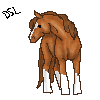
rhonen
molten eyes and a smile made for war
Rhonen gives up on looking for someone watching her, and he gives up soon after on figuring out why he is so drawn to her, beyond the fact that she reminds him of Aubri. He doesn’t want to care about her, so he tells himself that he would do the same for any child wandering the world by themselves.
It’s a lie, but it’s one he’s comfortable with.
When she speaks again, making a dry joke, Rhonen slips into a smirk, a laugh in his eyes, his usual response to humor. It is only after a long moment of silence passes that he realizes she can’t see him laughing, and he wants to kick himself. He opens his mouth to say something, but then she is responding to his other question, moving on. He doesn’t want to move on, he wants to turn back time and force a chuckle for her effort, but with some reluctance he follows her train of words into the present.
Her statement is worlds wise beyond what he could have come up with when he was her age, and the chestnut boy is left staring at her for another long moment, dark eyes softening from their earlier anger to a sorrow for her, that she already knows more of the dangers of the world than she should. “Yes, I suppose it is,” he agrees with her then, nodding absently while he speaks, “But that isn’t all there is. For everything that brings unhappiness, there is something out there to bring joy.” The words are solemn, voice rough still, but quieter to match hers. Rhonen realizes he believes his own words – despite his fear, his anger, his desperation, he believes that it will get better. He might have to drag that happiness to himself, kick and screaming, but it cannot be like this forever. He wants her to believe it, too.
But she changes the subject again, and he blinks in surprise, and this does draw a chuckle (however rusty) from him as he considers. “Well,” he drawls, eyeing her head-to-tail again, “You’re kind of bright. Chestnut, like me actually, like a color out of a sunset. And white, too; you’ve got some spots here,” he touches a few of them, feather light, as if she might break, “and white on your legs. And your mane and tail are blond, kinda yellowy-white, like the seed pods on the tops of wild grasses.” It’s all too much, he’s aware of how soft and friendly his voice had gotten as he described her, so he finishes more brusquely: “And you’re kind of a scrawny little thing, really, but I’m sure you’ll grow out of that.”
