
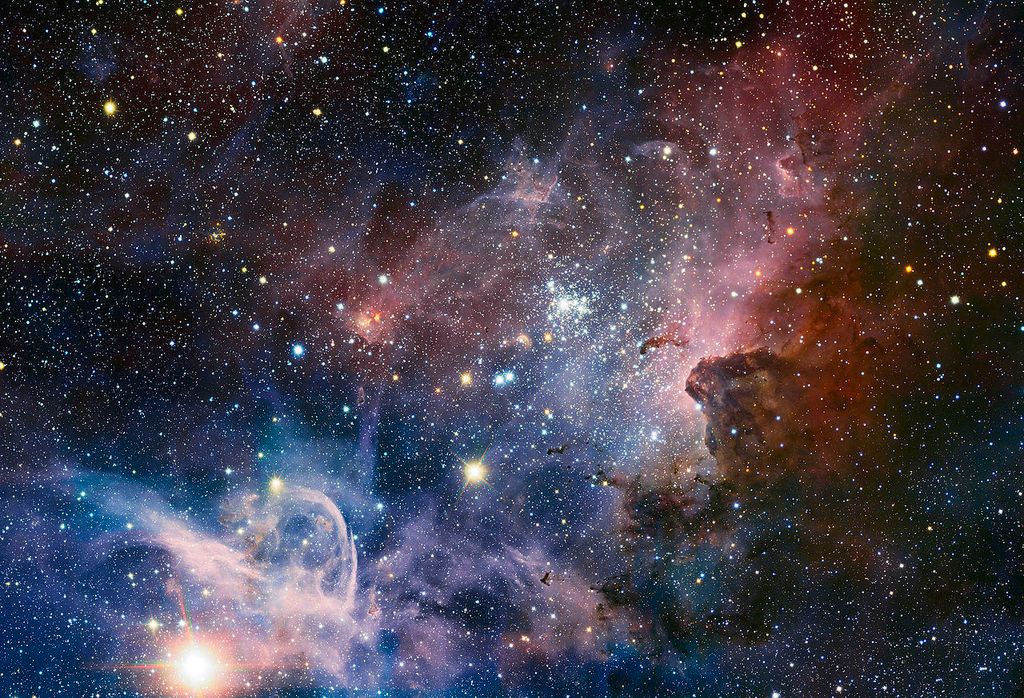
She is a mirror, and it is wholly inadequate. She cannot capture the stars the way she once did, and besides, earth only gives them a modicum of what’s truly there. Here, they do not know what the galaxies are like, the way a star looks when it explodes.
(How long had she lived there? It doesn’t matter; time did not exist in such a dark and lovely place.)
Now there is only a slice of the sky, and she is microscopic, a speck of dust on a small planet with a few stars settled across her and a wistful gaze to return.
But she has not returned, she is here, grounded, terrestrial, with a strange black boy who murmurs questions in the nighttime.
“For the whole sky,” she says. Come daytime, she will be blue, or grey, depending on the clouds. She has no color to call her own.
He sidles from her question - here and there he says, saying nothing and saying enough with it at once, turns it back to her.
(She is a mirror.)
“My mother was a star and my father was a god,” she says. It’s too strange a tale to be anything but true, though it sounds like something odd, a creation myth, “and my brother and I lived with them, out in space.”
Timeless, dark, there with Cosmos as worlds collapsed around them and eternity beckoned. She misses him almost as much as she does the sky.
“Then I came here,” she says, “I don’t remember falling. I was floating, then I was walking.”
astra inclinant, non necessitant
(the stars incline, they do not compel)